<?xml version="1.0" encoding="utf-8"?><Thesaurus
	xmlns="http://schemas.bs8723.org/XmlSchema/"
	xmlns:dc="http://purl.org/dc/elements/1.1/"
	xmlns:dcterms="http://purl.org/dc/terms/"
	xmlns:eGMS="http://www.govtalk.gov.uk/CM/gms"
	xmlns:xsi="http://www.w3.org/2001/XMLSchema-instance"
	xsi:schemaLocation="http://schemas.bs8723.org/XmlSchema/DD8723-5.xsd">	 <dc:identifier>http://mamoura.eci.ufmg.br/tematres/vocab/</dc:identifier>  <dc:title>COEXISTENCE  - Thesaurus of intersectionality  and decolonial issues: black studies, gender, sexuality  and feminist studies</dc:title>  <dc:creator>Maria Aparecida Moura</dc:creator>  <dc:subject>intersectionality, genre, race, sexuality, feminism,  decolonial issues,</dc:subject>  <dc:description><![CDATA[ The COEXISTENCE Thesaurus, dedicated to the exploration of intersectionality within the realms of race, gender, sexuality, and feminist studies, serves as a tool for organizing knowledge from an intersectional perspective. Throughout history, traditional knowledge organization systems have often inadvertently reinforced oppressive structures, particularly in matters pertaining to race, gender, sexuality, and feminist studies.

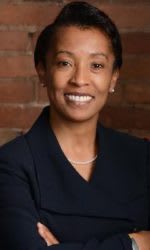
The primary objective of COEXISTENCE is to systematically categorize, structure, and disseminate terms, concepts, and theories that empower us as scholars, information professionals, activists, educators, and opinion leaders. By doing so, we aim to contribute to the collective effort towards a fairer and more egalitarian world. This undertaking is essential in fostering a comprehensive understanding and progressive discourse in the academic and societal domains. ]]></dc:description>  <dc:publisher>Maria Aparecida Moura</dc:publisher>  <dc:date>2017-02-01</dc:date>  <dc:language>en-US</dc:language><ThesaurusConcept dc:identifier="http://mamoura.eci.ufmg.br/tematres/vocab/xml.php?skosTema=1185">	<dcterms:created>2019-04-22 07:46:50</dcterms:created><PreferredTerm dc:identifier="http://mamoura.eci.ufmg.br/tematres/vocab/xml.php?skosTema=1185" xml:lang="en-US">	<LexicalValue>Rhonda Vonshay Sharpe</LexicalValue>	<dcterms:created>2019-04-22 07:46:50</dcterms:created></PreferredTerm><HistoryNote xml:lang="en-US">  <LexicalValue><![CDATA[ <p><img class="myclass" src="https://res.cloudinary.com/highereducation/image/upload/f_auto,fl_lossy,q_auto/v1/TheBestSchools.org/Rhonda-Vonshay-Sharpe-e1519063331766.jpg" border="0" alt="Rhonda Vonshay Sharpe" /></p>
<p>Sharpe was born in New York City, but was raised in Virginia. She earned her bachelor’s degree in mathematics in 1988 from North Carolina Wesleyan University. She holds three master’s degrees: in applied mathematics from Clark Atlanta University (1992); in operations research from Stanford University (1994); and in economics from Claremont Graduate University. She obtained her PhD in economics/mathematics in 1998, also from Claremont Graduate University.</p>
<p>After obtaining her PhD, Sharpe taught at a number of colleges and universities, including Barnard College, Bucknell University, Columbia University, Duke University, and the University of Vermont. From 2009 until 2012, she served as Associate Professor and Chair of the Department of Business and Economics at Bennett College. She is the co-founder of the Diversity Initiative for Tenure in Economics (DITE), which she served as Associate Director from 2008 until 2014. During the 2008–2009 academic year, she was also Institute of Higher Education Law & Governance Fellow at the University of Houston Law Center. In 2016, Sharpe founded the Women’s Institute for Science, Equity, and Race (WISER), which she currently heads.</p>
<p>Sharpe’s work as an economist lies primarily at the intersection between labor economics and feminist economics. More specifically, she has paid particular attention to the academic labor market as it relates to African American women. And within this special emphasis on the university as a professional milieu, she has further focused on black women in the STEM fields. However, from time to time her research has ranged far more widely, reflecting her broad concern with the causes of poverty globally. For example, she has co-authored a study on the wage differential between urban and rural-urban migrant laborers in China,<sup><a id="text11" title="See Footnote #11." href="https://thebestschools.org/features/black-scholars-you-should-know/#note11" rel="nofollow">[11]</a></sup> as well as the article on global poverty for an important new encyclopedia on gender and sexuality studies.<sup><a id="text12" title="See Footnote #12." href="https://thebestschools.org/features/black-scholars-you-should-know/#note12" rel="nofollow">[12]</a></sup> Moreover, the institution Sharpe founded and serves as President, WISER, is the first think tank to focus solely on the social, economic, cultural, and political well-being of women of color.</p>
<p>Sharpe has co-authored or co-edited two books (see below), and authored or co-authored many peer-reviewed articles, which have appeared in the <cite>American Journal of Economics and Sociology</cite>, the <cite>Review of Black Political Economy</cite>, and the <cite>Journal of Diversity in Higher Education</cite>, among other places. She has also co-authored chapters in five prominent edited volumes, in addition to the encyclopedia entry mentioned above.</p>
<p><strong>Publications:</strong></p>
<ul>
<li><cite>Black Female Undergraduates on Campus: Successes and Challenges</cite> (Emerald Group Publishing, 2012)</li>
<li><cite>Black Women in the US Economy: The Hardest Working Woman</cite> (Routledge, 2018)</li>
</ul>
<p><strong>Source:</strong> <a href="https://thebestschools.org/features/black-scholars-you-should-know/" target="_blank">https://thebestschools.org/features/black-scholars-you-should-know/</a></p> ]]> </LexicalValue></HistoryNote></ThesaurusConcept></Thesaurus>