<?xml version="1.0" encoding="utf-8"?><Thesaurus
	xmlns="http://schemas.bs8723.org/XmlSchema/"
	xmlns:dc="http://purl.org/dc/elements/1.1/"
	xmlns:dcterms="http://purl.org/dc/terms/"
	xmlns:eGMS="http://www.govtalk.gov.uk/CM/gms"
	xmlns:xsi="http://www.w3.org/2001/XMLSchema-instance"
	xsi:schemaLocation="http://schemas.bs8723.org/XmlSchema/DD8723-5.xsd">	 <dc:identifier>http://mamoura.eci.ufmg.br/tematres/vocab/</dc:identifier>  <dc:title>COEXISTENCE  - Thesaurus of intersectionality  and decolonial issues: black studies, gender, sexuality  and feminist studies</dc:title>  <dc:creator>Maria Aparecida Moura</dc:creator>  <dc:subject>intersectionality, genre, race, sexuality, feminism,  decolonial issues,</dc:subject>  <dc:description><![CDATA[ The COEXISTENCE Thesaurus, dedicated to the exploration of intersectionality within the realms of race, gender, sexuality, and feminist studies, serves as a tool for organizing knowledge from an intersectional perspective. Throughout history, traditional knowledge organization systems have often inadvertently reinforced oppressive structures, particularly in matters pertaining to race, gender, sexuality, and feminist studies.

The primary objective of COEXISTENCE is to systematically categorize, structure, and disseminate terms, concepts, and theories that empower us as scholars, information professionals, activists, educators, and opinion leaders. By doing so, we aim to contribute to the collective effort towards a fairer and more egalitarian world. This undertaking is essential in fostering a comprehensive understanding and progressive discourse in the academic and societal domains. ]]></dc:description>  <dc:publisher>Maria Aparecida Moura</dc:publisher>  <dc:date>2017-02-01</dc:date>  <dc:language>en-US</dc:language><ThesaurusConcept dc:identifier="http://mamoura.eci.ufmg.br/tematres/vocab/xml.php?skosTema=508">	<dcterms:created>2017-06-25 11:01:26</dcterms:created><PreferredTerm dc:identifier="http://mamoura.eci.ufmg.br/tematres/vocab/xml.php?skosTema=508" xml:lang="en-US">	<LexicalValue>Judith Butler</LexicalValue>	<dcterms:created>2017-06-25 11:01:26</dcterms:created></PreferredTerm><ScopeNote xml:lang="fr">  <LexicalValue><![CDATA[ <p><img class="irc_mi" src="https://ogimg.infoglobo.com.br/in/20979134-42d-00f/FT460A/65018770_Foto-da-filosofa-americana-Judith-Butler-SC.jpg" border="0" alt="Resultado de imagem para judith butler" width="352" height="589" /></p>
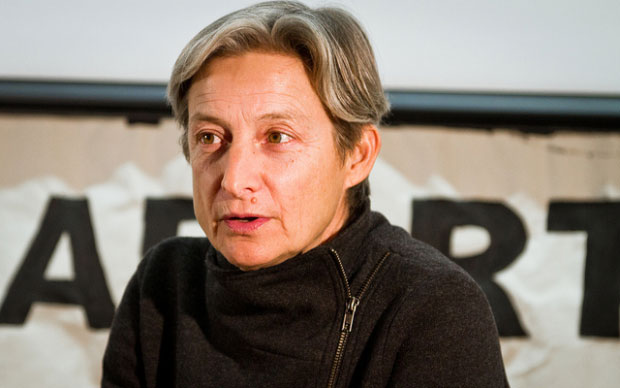
<p>Judith Butler est née à Cleveland dans l'Ohio1. Elle est issue d'une famille juive et a reçu une éducation religieuse. Elle se définit aujourd'hui comme « juive anti-sioniste »2. Elle est professeur, titulaire de la chaire Maxine Elliott dans les départements de rhétorique et de littérature comparée à l'université de Californie à Berkeley. Butler a reçu son Ph.D. en philosophie à l'université Yale en 1984, et sa thèse a été plus tard éditée sous le titre « Sujets du désir : Réflexions hégéliennes au vingtième siècle en France ».<br /><br />À la fin des années 1980, elle entretenait différents efforts post-structuralistes dans la théorie féministe occidentale, ayant pour but l'interrogation des « termes présuppositionnels » du féminisme. Pour Butler, remettre en cause les présuppositions fondamentales du féminisme occidental signifiait l'ouverture du féminisme vers la théorie queer et les gender studies, dont elle est devenue une figure importante3.<br /><br />Elle est membre du comité de parrainage du tribunal Russell sur la Palestine, dont les travaux ont commencé le 4 mars 2009.</p>
<p>Voir aussi:<a href="https://www.ceert.org.br/noticias/genero-mulher/18180/uma-conversa-com-angela-davis-e-judith-butler" target="_blank">Uma conversa com Angela Davis e Judith Butler</a></p>
<p>Référence: https://fr.wikipedia.org/wiki/Judith_Butler</p> ]]> </LexicalValue></ScopeNote><ScopeNote xml:lang="en-US">  <LexicalValue><![CDATA[ <p><strong><span class="srTitle"><img class="myclass" src="http://www.famousphilosophers.org/philosophers/judith-butler.jpg" border="0" alt="Judith Butler Picture" /></span></strong></p>
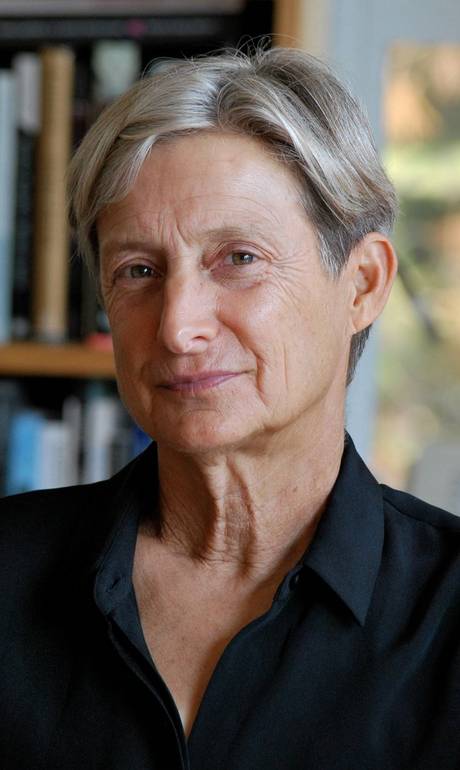
<p>Judith Butler (born February 24, 1956) is an American philosopher and gender theorist whose work has influenced political philosophy, ethics and the fields of third-wave feminist, queer and literary theory. Since 1993, she has taught at the University of California, Berkeley, where she is now Maxine Elliot Professor in the Department of Comparative Literature and the Program of Critical Theory. She is also the Hannah Arendt Chair at the European Graduate School.<br />Butler is best known for her books Gender Trouble: Feminism and the Subversion of Identity (1990) and Bodies That Matter: On the Discursive Limits of Sex (1993), in which she challenges conventional notions of gender and develops her theory of gender performativity. This theory has had a major influence on feminist and queer scholarship.Her works are often implemented in film studies courses emphasizing gender studies and the performativity in discourse. Butler has actively supported lesbian and gay rights movements and has spoken out on many contemporary political issues. In particular, she is a vocal critic of Zionism, Israeli politics and its effect on the Israeli–Palestinian conflict, emphasizing that Israel does not and should not be taken to represent all Jews or Jewish opinion.</p>
<p><strong><span class="srTitle">URL: <a href="https://en.wikipedia.org/wiki/Judith_Butler">https://en.wikipedia.org/wiki/Judith_Butler</a><br /></span></strong></p>
<p> </p>
<p> </p> ]]> </LexicalValue></ScopeNote><HasHierRelConcept Role="BT">http://mamoura.eci.ufmg.br/tematres/vocab/xml.php?skosTema=507</HasHierRelConcept></ThesaurusConcept></Thesaurus>